
Well-being and work are fundamental dimensions of human fulfilment. The former relates to life satisfaction and to each person’s ability to reach their full potential; the latter has become, nowadays, an almost unquestionable necessity. The importance of both dimensions is, in fact, recognised in the United Nations’ 2030 Agenda, in the goals aimed at ensuring healthy lives and promoting decent work for all [1].
The available evidence, however, points to a relationship between health, well-being, and work that is far from harmonious. According to the report “Work and Health in Portugal – 2016,” Portuguese workers report that their job negatively affects their health more frequently than the Euro Zone average, also showing a higher prevalence of adverse psychosocial work contexts and musculoskeletal complaints [2]. In OECD well-being statistics, Portuguese respondents rate their life satisfaction at an average of 5.8 (on a scale of 0 to 10), below the OECD average of 6.7 [3].
Several factors contribute to this picture. Digitalisation has eliminated the geographic boundaries of work, creating a sense of constant connectivity that undermines rest and reduces self-regulation capacity. Pressure for agility and chronic multitasking carry a real cognitive cost: it takes a person, on average, around 23 minutes to fully regain concentration after a single interruption, with a direct impact on productivity [4]. Sleep deprivation correlates negatively with logical reasoning, executive function and memory, and can progress to anxiety and depression [5]. Prolonged stress exposure, meanwhile, has a measurable impact on cognitive function, affecting attention, memory and the quality of decision-making [6].
The implications for organisations are clear. When employee well-being is neglected, costs associated with absenteeism, workplace accidents, sick leave and insurance premiums tend to rise. When well-being is instead treated as a structural priority, there is a positive correlation with organisational climate, talent retention, customer satisfaction and the company’s own productivity and profitability. The question facing companies, then, is not whether well-being should be a concern, but whether it will be addressed in a structured, evidence-based way or left to chance.
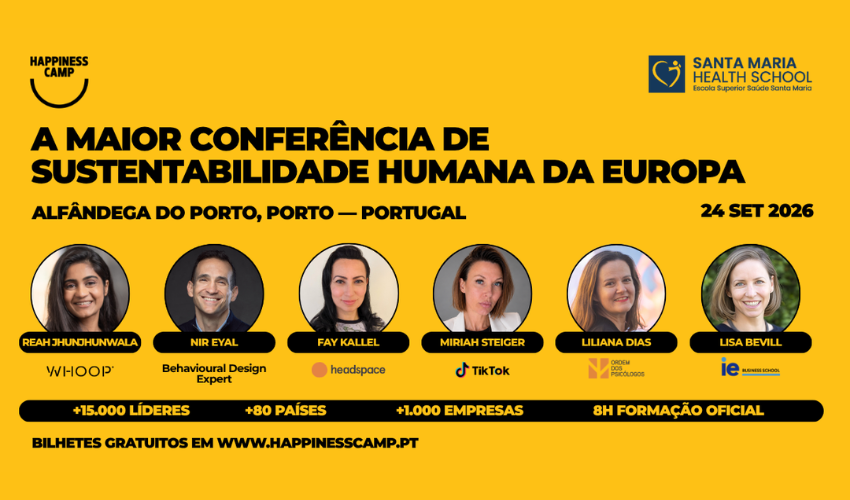
It is precisely this discussion, on health, trust and human sustainability in the future of work, that will be at the centre of the 4th edition of the @Happiness Camp, returning to Porto on 24 September 2026 under the theme “The Reset.” @Santa Maria Health School – Escola Superior de Saúde de Santa Maria is taking part in this edition as an institutional partner, reaffirming its commitment to promoting health and well-being both inside and outside organisations.
Article writed by Daniela Simões
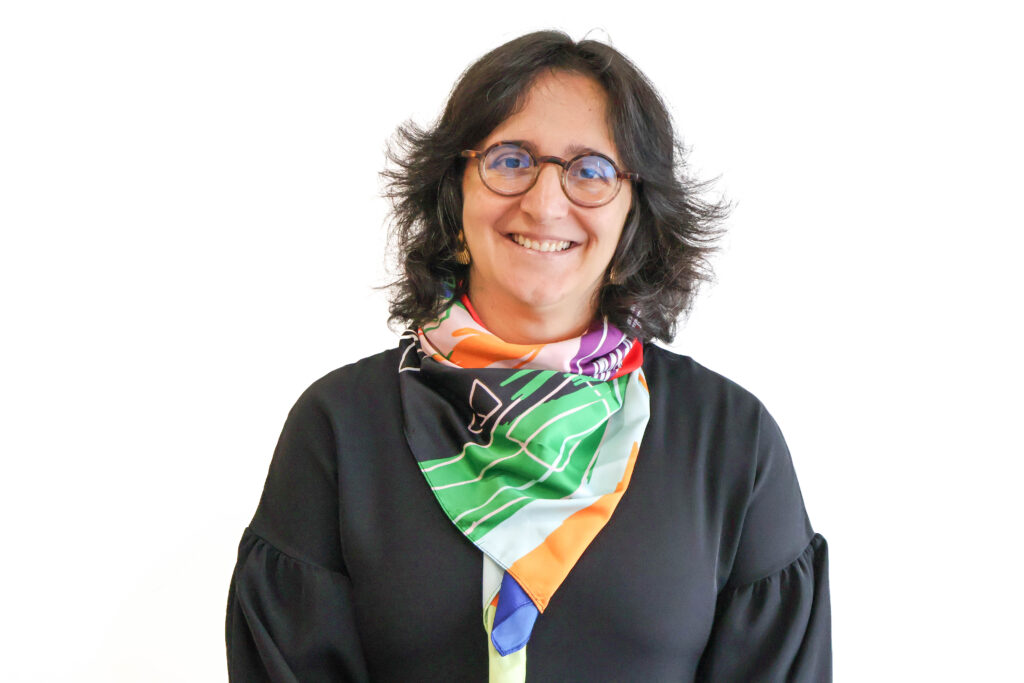
(Vice-Presidente da Santa Maria Health School – Escola Superior de Saúde de Santa Maria)
References
[1] United Nations. Transforming Our World: The 2030 Agenda for Sustainable Development, Goal 8 — Decent Work and Economic Growth.
[2] Monjardino T, Amaro J, Batista A, Norton P. Trabalho e Saúde em Portugal 2016. Porto: Instituto de Saúde Pública da Universidade do Porto (ISPUP), 2016.
[3] OECD. Better Life Index — Portugal. Organisation for Economic Co-operation and Development.
[4] Mark G, Gudith D, Klocke U. The Cost of Interrupted Work: More Speed and Stress. In: Proceedings of the SIGCHI Conference on Human Factors in Computing Systems (CHI ’08), 2008, pp. 107–110.
[5] Hyndych A, El-Abassi R, Mader EC. The Role of Sleep and the Effects of Sleep Loss on Cognitive, Affective, and Behavioral Processes. Cureus. 2025;17(5):e84232. doi:10.7759/cureus.84232.
[6] Girotti M, Adler SM, Bulin SE, Fucich EA, Paredes D, Morilak DA. Prefrontal cortex executive processes affected by stress in health and disease. Progress in Neuro-Psychopharmacology and Biological Psychiatry. 2018;85:161–179. doi:10.1016/j.pnpbp.2017.07.004.